University of Reading brand guidelines
The University of Reading brand guidelines provide clear standards across logo usage, tiered typography, color palettes, and staff templates.
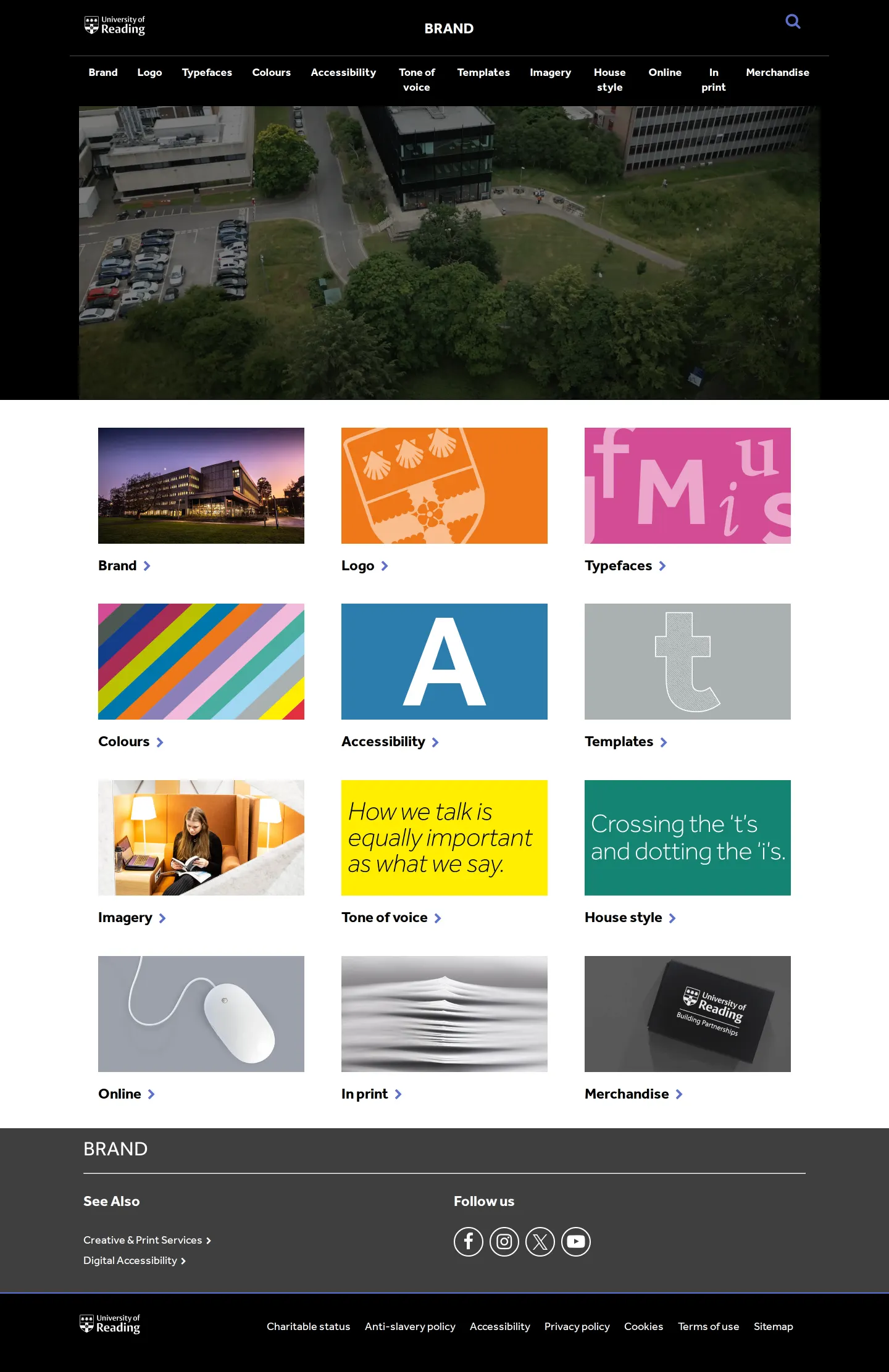
Brand home page for the University of Reading featuring a campus photo hero section and a grid of brand category navigation cards.
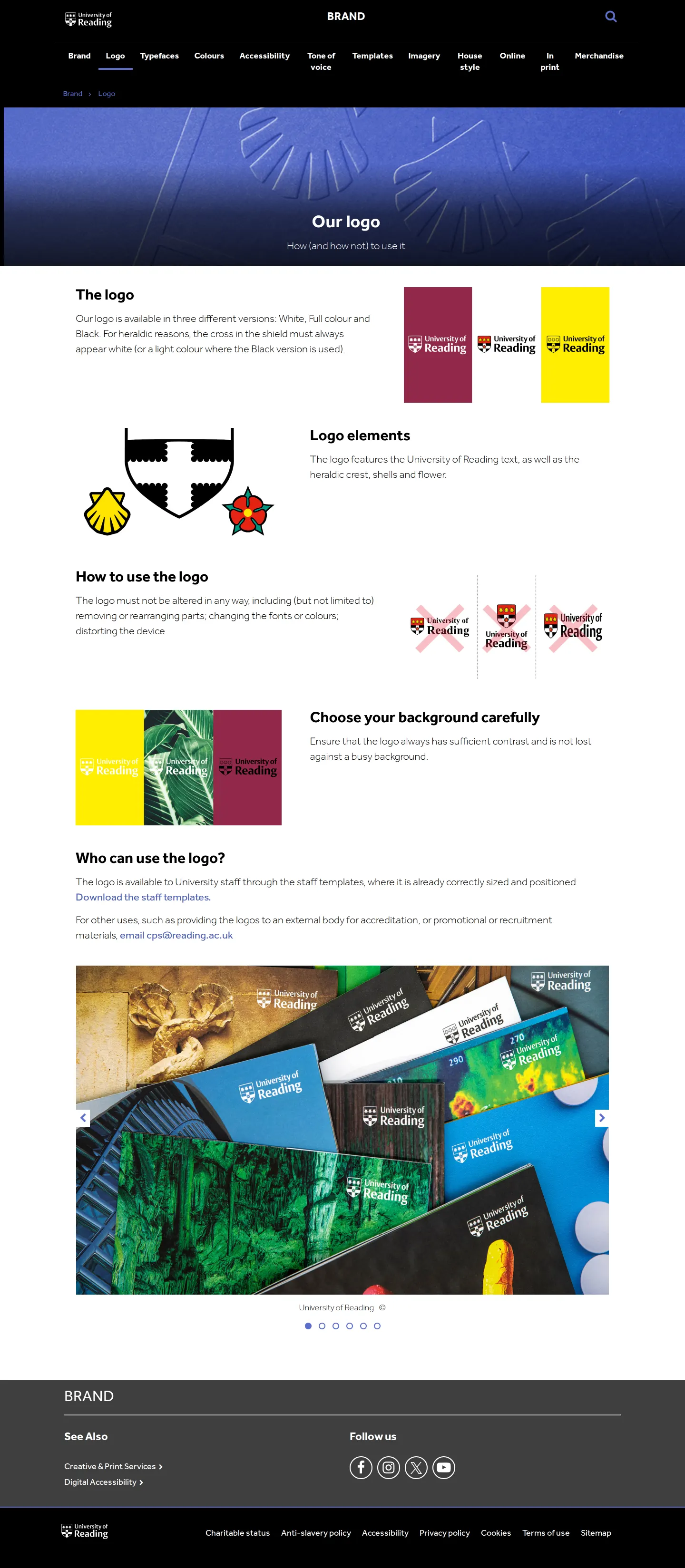
University of Reading brand portal page detailing logo usage, color versions, rules, and print application examples.
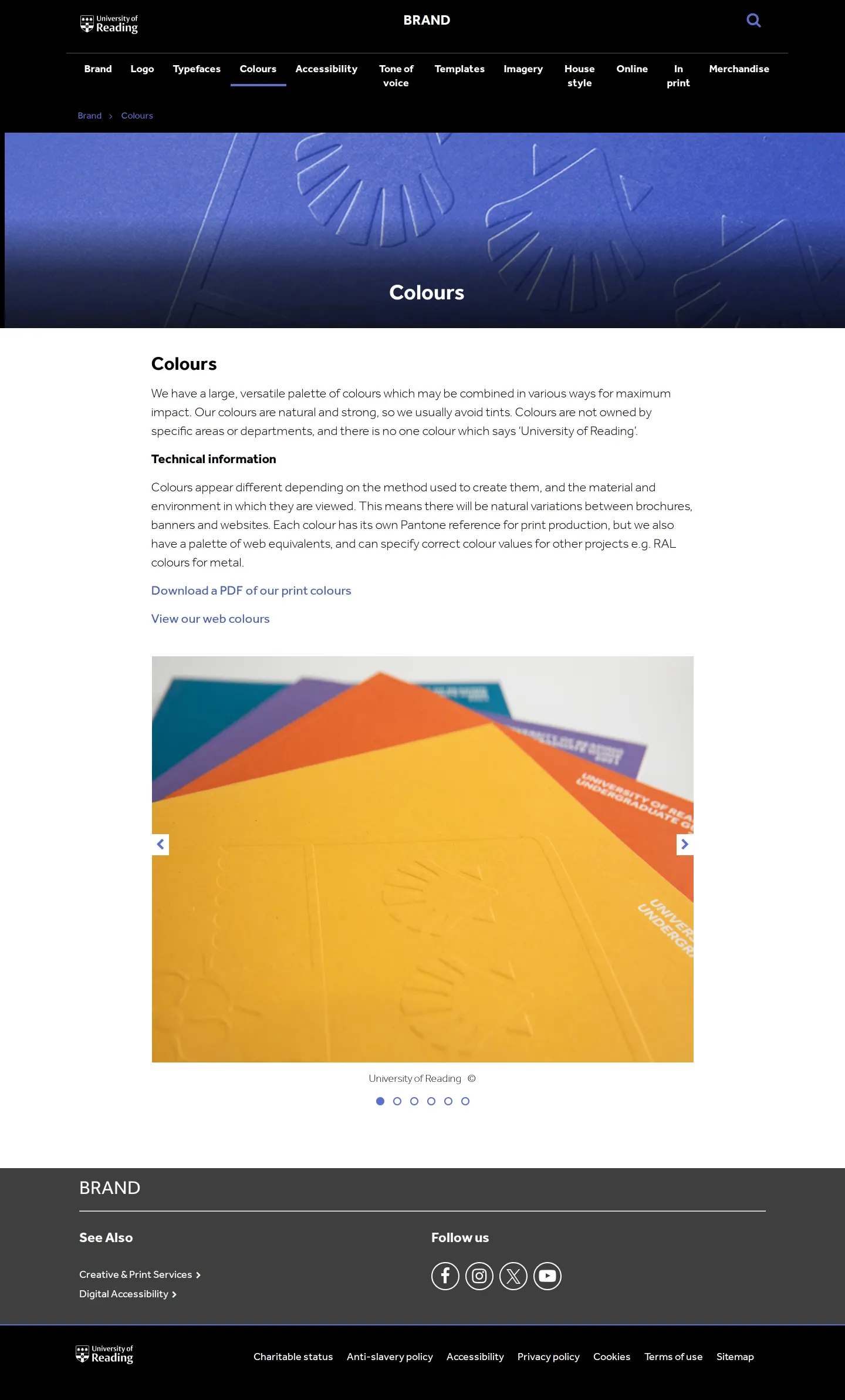
Colours overview page from the University of Reading brand guidelines website.
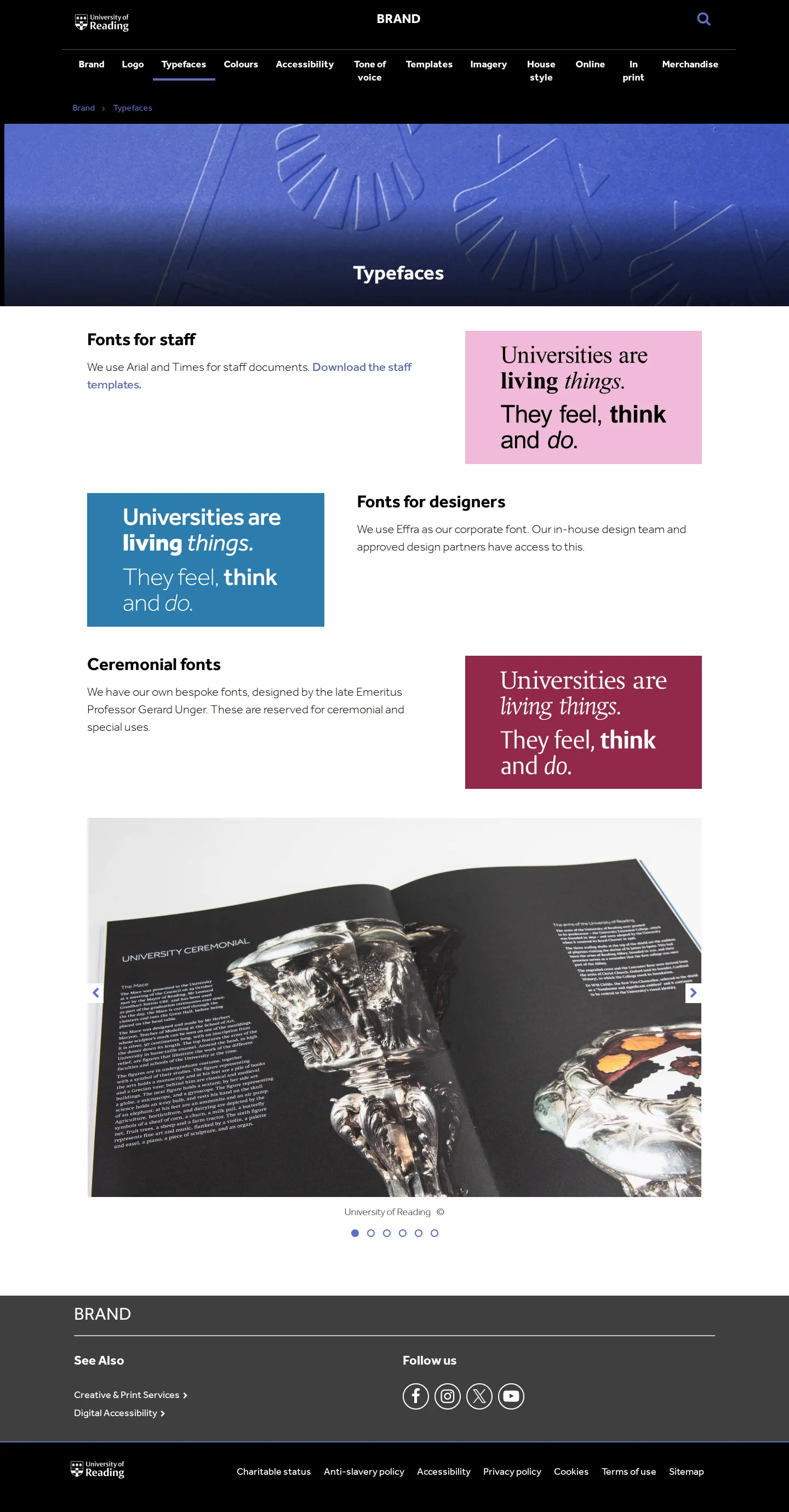
Typefaces documentation page for the University of Reading brand.
Templates page of the University of Reading brand guidelines website showing an introductory overview for staff.
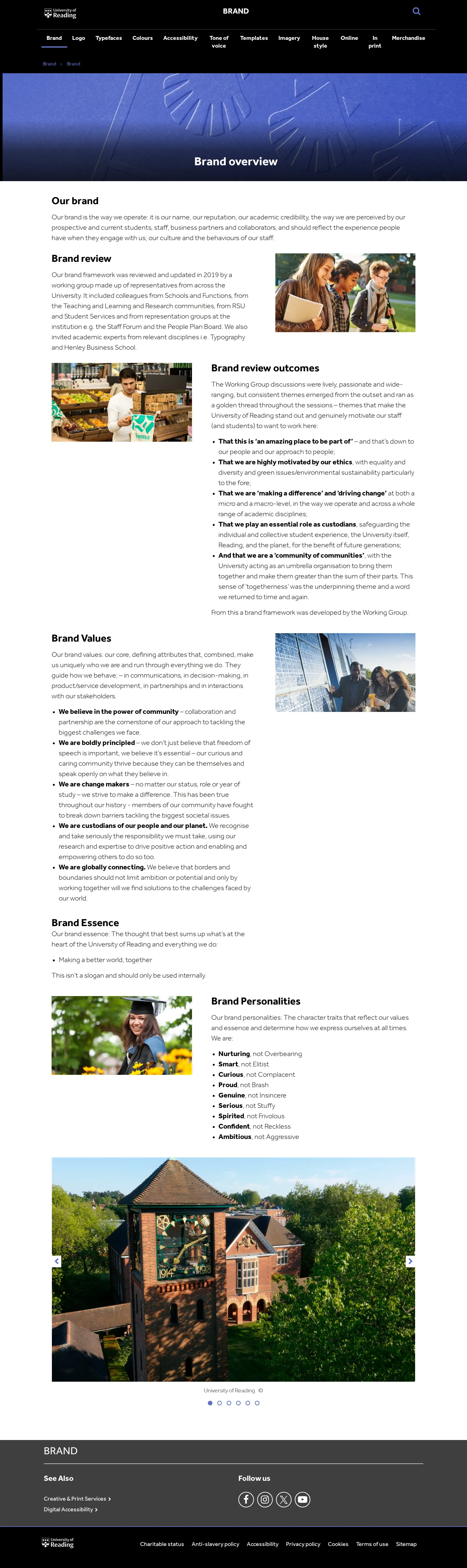
Brand overview page for the University of Reading detailing the institution's brand review, values, essence, and personality traits.
Want a brand center like University of Reading’s?
Create your brand center with Freedam ↗Freedam's take
I like how pragmatic the University of Reading is with its typography. Instead of pretending every department will license and configure custom fonts, the site explicitly segments its typefaces. Everyday staff use Arial and Times, the in-house design team gets Effra, and special ceremonial documents receive bespoke fonts designed by Gerard Unger. The clear division between internal office tools and professional design services keeps everything grounded. The color rules are equally restrained, steering clear of tints and noting that no single color represents the whole institution.
At a glance
- Sections
- Brand · Logo · Typefaces · Colours · Accessibility · Tone of voice · Templates · Imagery · House style · Online · In print · Merchandise
- Downloads
- Tone
- Clear, practical, and academic, balancing everyday staff needs with institutional heritage.
What I noticed
- The brand guidelines define distinct typeface allocations, assigning Arial and Times to staff documents, reserving Effra for design teams, and designating bespoke Gerard Unger typefaces for ceremonial use.123
- The logo section outlines three variants—White, Full colour, and Black—identifying elements like the heraldic crest, shells, and flower while detailing misuse rules and background contrast considerations.4567
- The color guidance instructs that tints are avoided, colors should be natural and strong, and no single color represents the entire university.8
- Staff templates are housed separately from professional design assets, directing internal teams to MS Office templates.910
Numbers refer to the screenshots above.
What I could not see
- Could not inspect the external MS Office templates link or the Creative & Print Services intranet area.
- Could not view the dedicated subpages for Accessibility, Imagery, Tone of voice, House style, Online, In print, or Merchandise.
Ideas to borrow
Quick answers
Which fonts does the University of Reading use?
Staff use system fonts Arial and Times, while the in-house design team uses Effra. Bespoke ceremonial fonts designed by Emeritus Professor Gerard Unger are reserved for ceremonial applications.123
Can external partners freely download the university logo?
The logo guidelines page links internal staff to internal templates and directs external parties to contact the university via email for permission and assets.11
Reviewed on 25 September 2026. Request a correction · I built this
Similar brand centers
All brand guidelines →