OpenStack brand guidelines
OpenStack provides brand licensing documentation and logo guidelines tailored for commercial partners, technical integrations, and open-source community organizers.
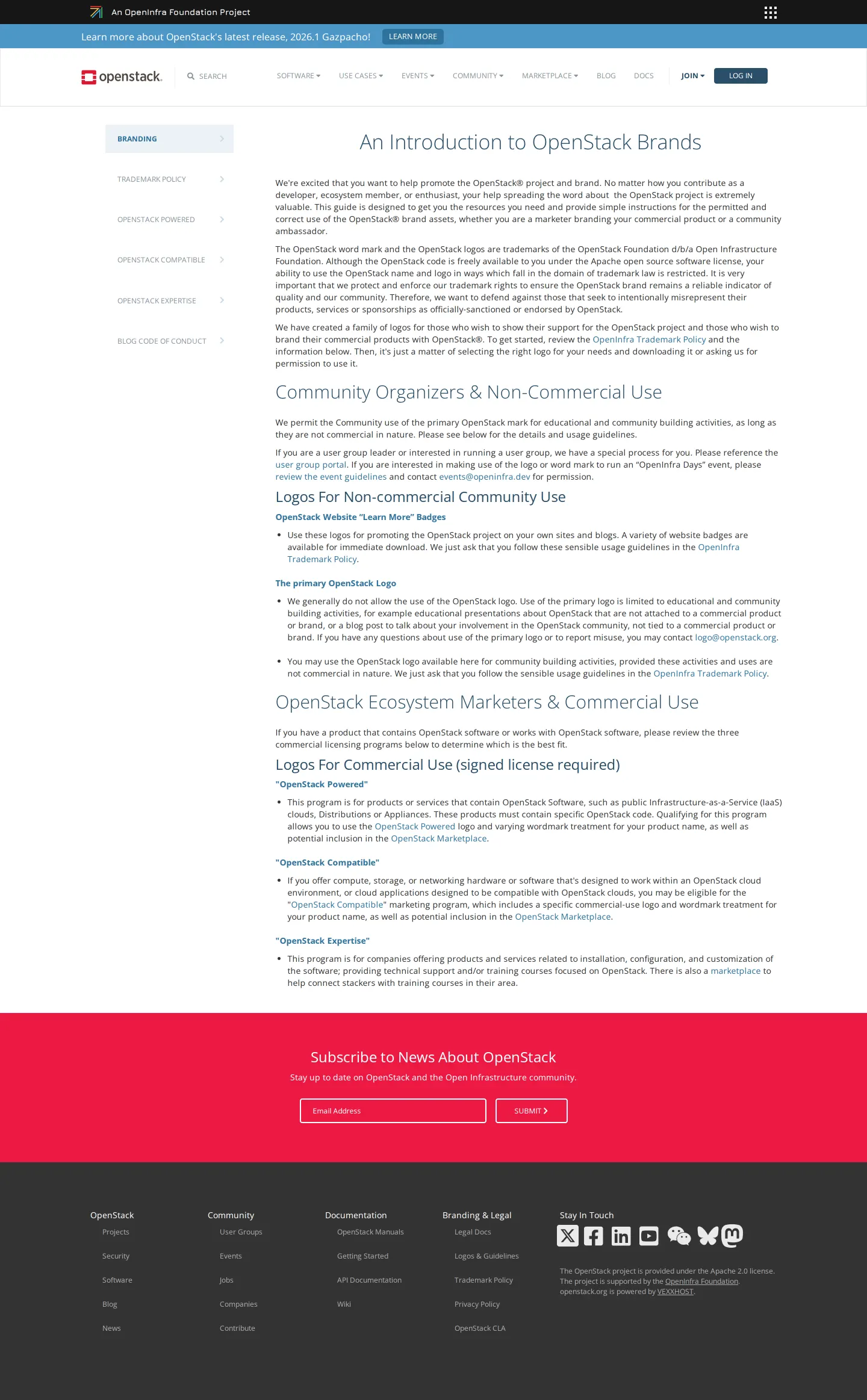
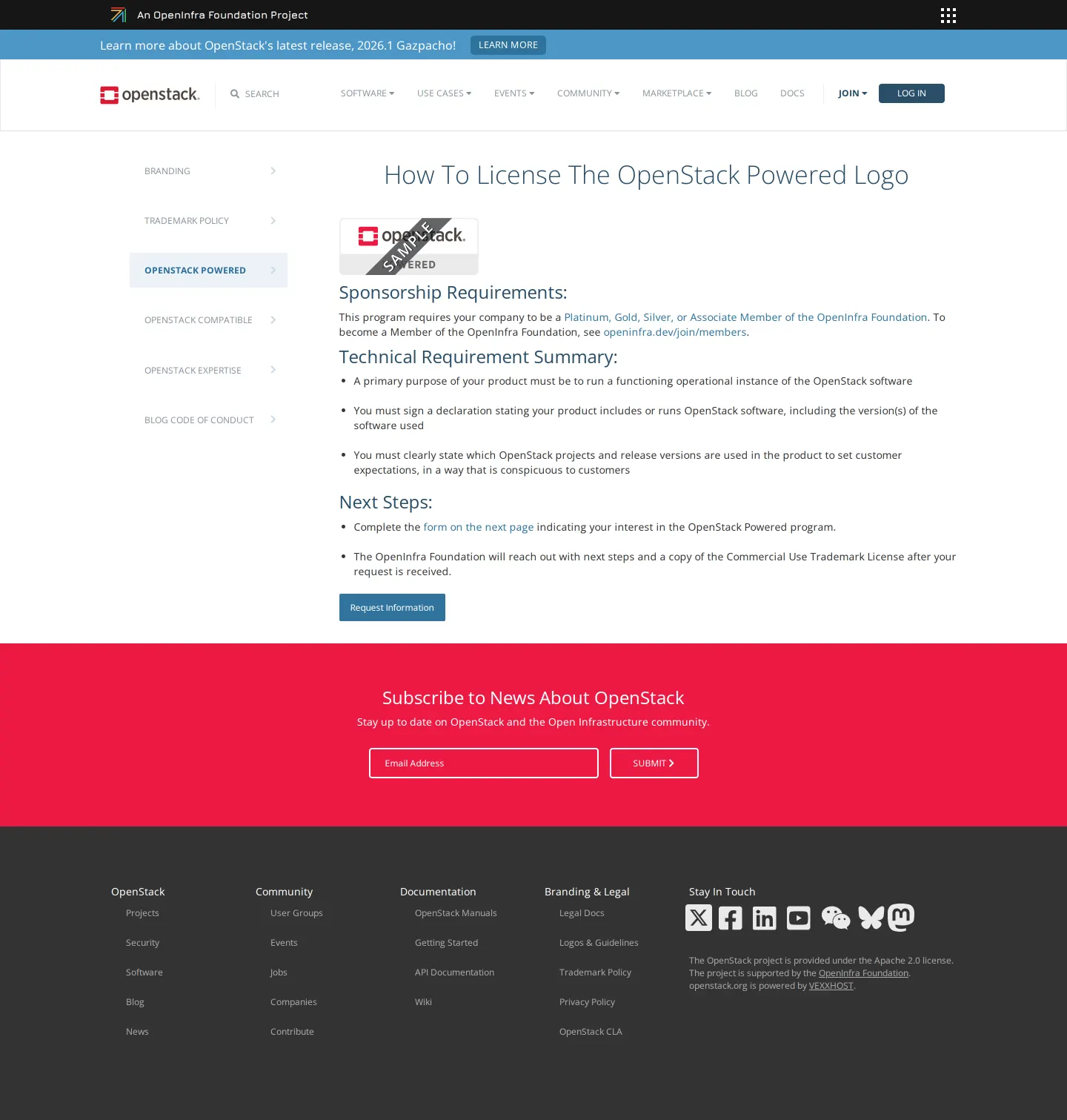
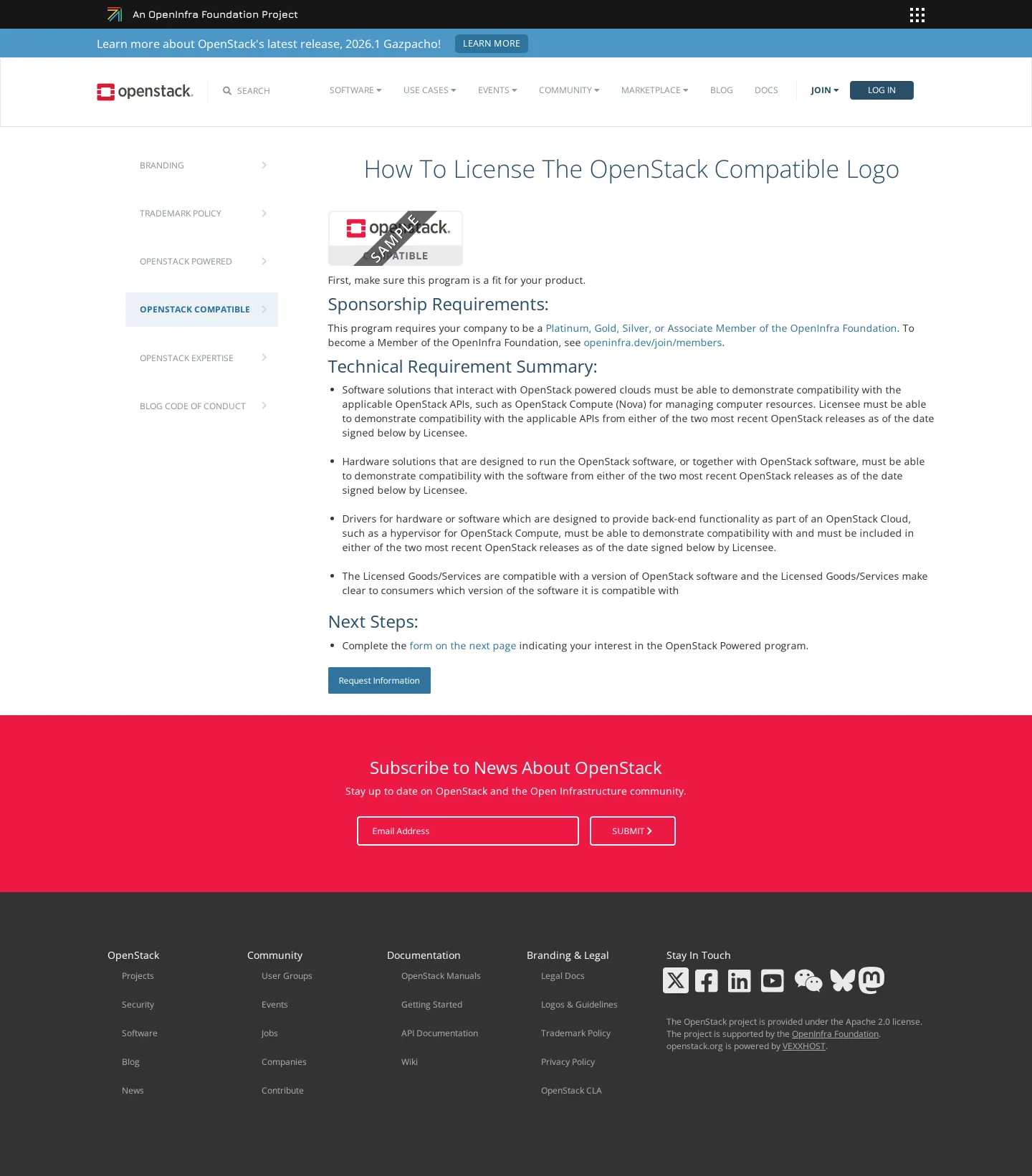
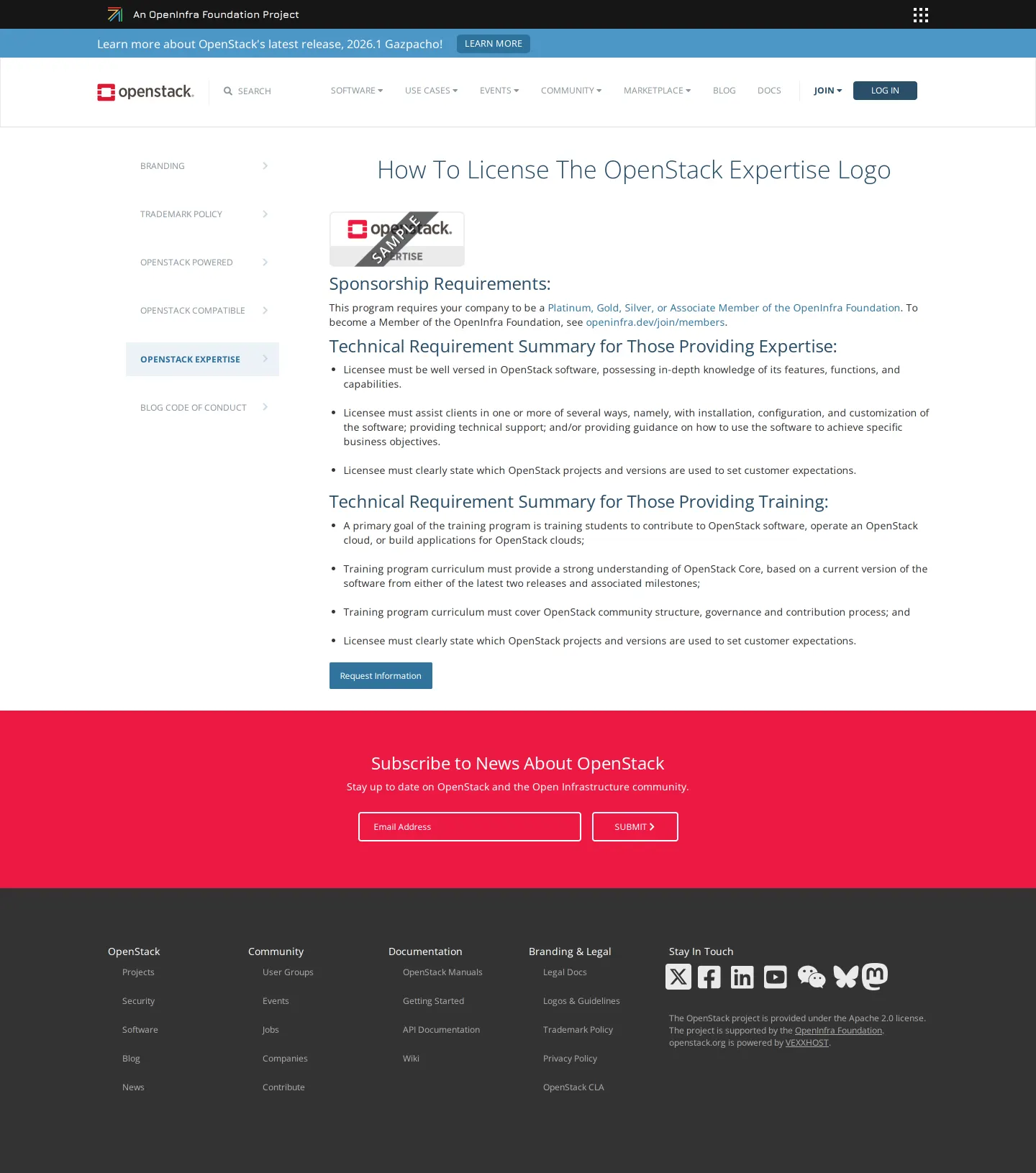
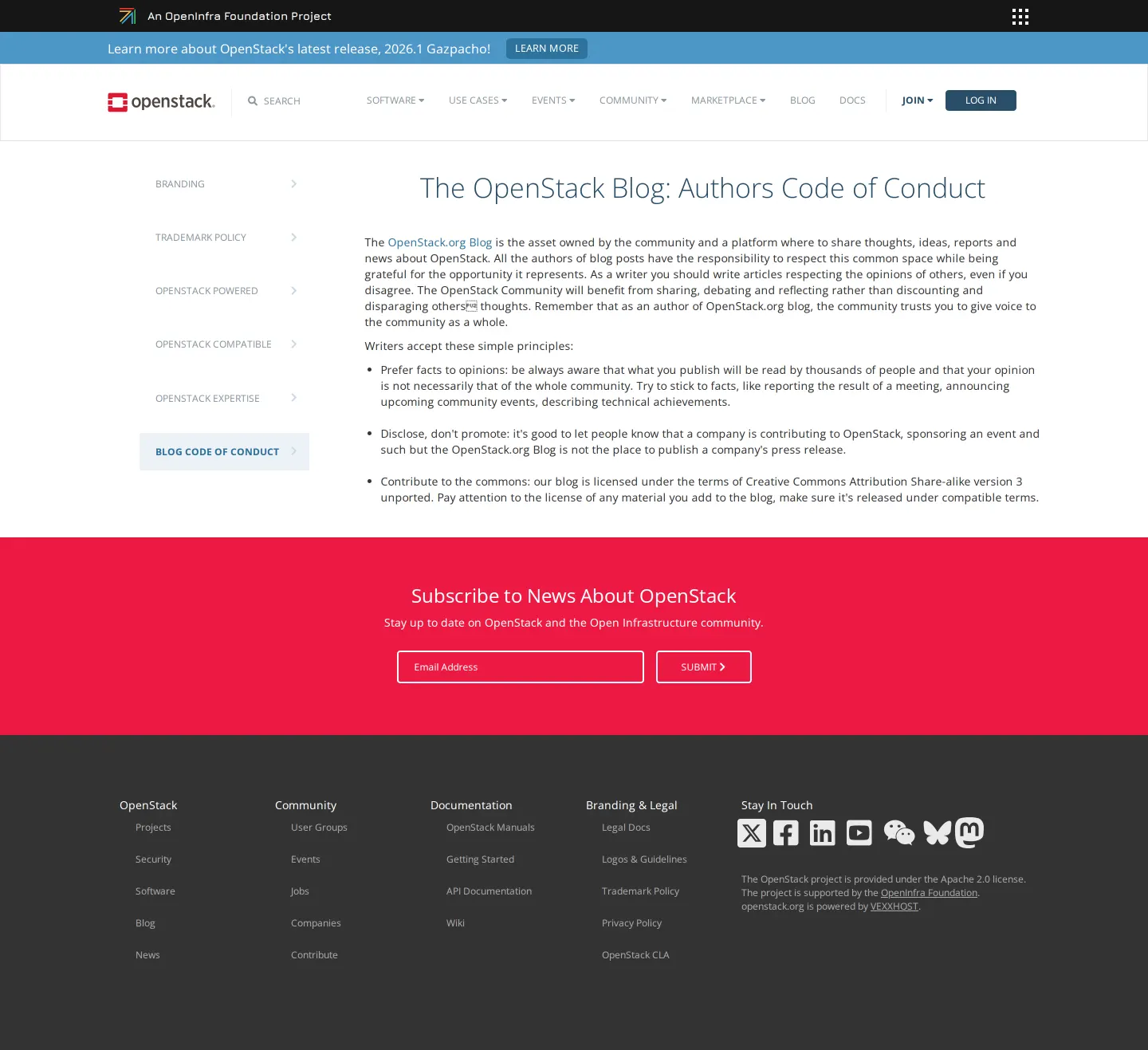
Freedam's take — When I looked through OpenStack's brand portal, I was struck by how clearly they structure logo licensing around their ecosystem. Rather than just offering generic assets, they segment rules between community organizers and commercial marketers. There are dedicated tracks for OpenStack Powered, OpenStack Compatible, and OpenStack Expertise marks. Each tier lays out explicit technical and sponsorship requirements before anyone can use the mark, alongside an authors code of conduct for contributors. It feels very functional, treating brand identity directly as an extension of open-source governance and technical compliance.
Details
- Type
- Guidelines
- Access
- Public
- Source
- openstack.org
- Industry
- Technology
- Capabilities
- Guidelines, Search
- Tags
- partner branding, legal & trademark, open source, logo usage
- Added
- Last checked
What I noticed
- The brand guidelines distinguish between non-commercial community organizers and commercial ecosystem marketers.123
- Separate pages outline technical and sponsorship licensing rules for marks like OpenStack Powered, OpenStack Compatible, and OpenStack Expertise.456789101112
- The website is built using SilverStripe.13
- The guidelines include an authors code of conduct for the OpenStack blog.14
Numbers refer to the screenshots above.
What I could not see
- I could not see direct asset download links or file formats for the logos.
- I could not view design system specifications such as color palettes, typefaces, or layout grids.
Ideas to borrow
- Break down commercial partner badges into discrete tiers based on verified technical compatibility and sponsorship levels.
Reviewed on 18 September 2026. Request a correction · I built this